
April 25, 2026
How to Fix a Smelly Car Cabin: 7 Proven Methods
Why Indonesian car cabins smell bad — and how to eliminate the odour permanently, not just mask it.
Read More →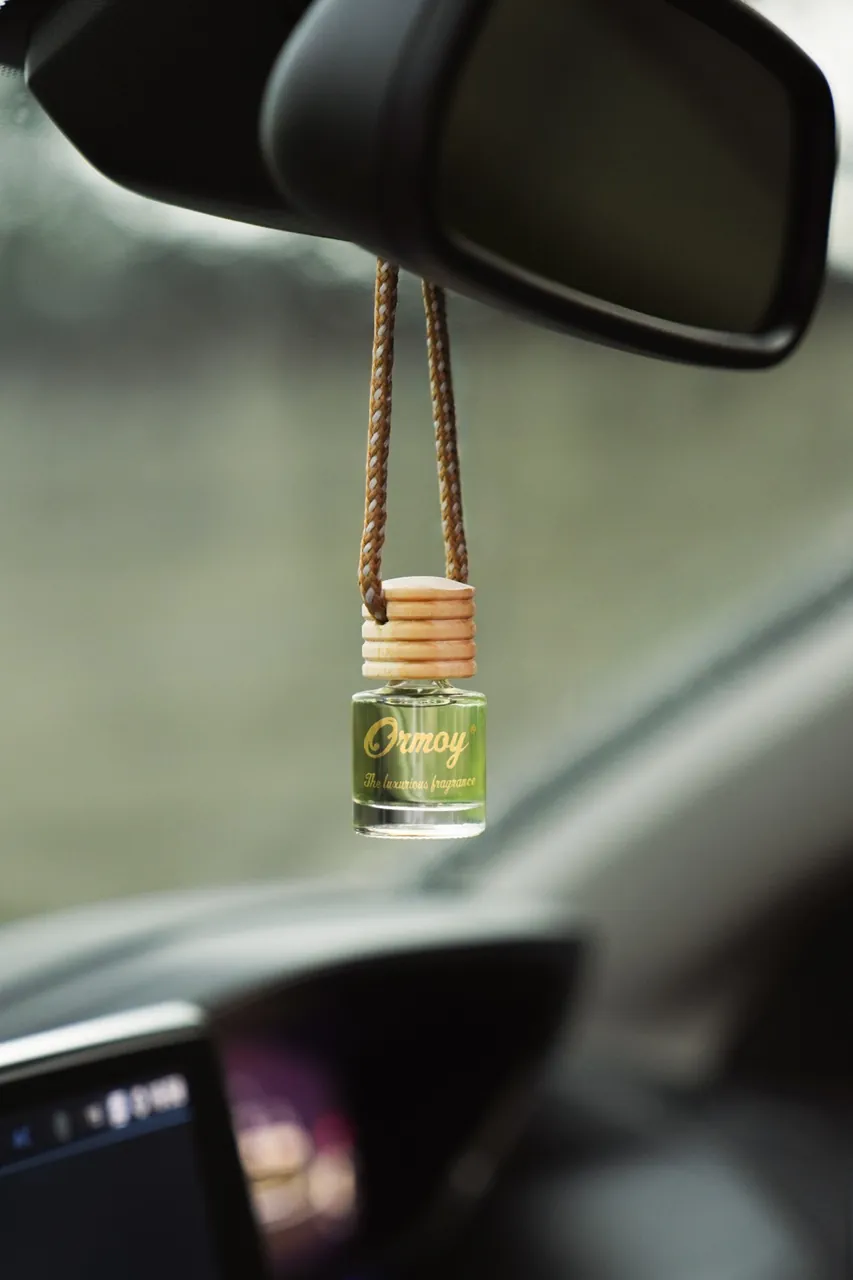
Table of Contents
Have you ever felt dizzy after a few hours in the car with the windows closed and the AC running? Or felt nauseous riding with someone who just put in a new car air freshener?
Most drivers blame the AC, fatigue, or the heat. The real cause is often simpler: the wrong car perfume.
A car cabin is an enclosed space with a very small air volume. A scent that feels mild in a large room can be two to three times more intense inside a cabin. If your air freshener releases too high a concentration of fragrance, the effects are immediate: dizziness, nausea, difficulty focusing, and even excessive drowsiness while driving.
This guide explains exactly why this happens — and how to choose a car perfume that is genuinely safe for daily use.
There are three main causes:
Volatile Organic Compounds (VOCs) are the chemical compounds that evaporate at room temperature — they're what you actually smell as fragrance. In safe doses from certified fragrance ingredients, VOCs are harmless. But cheap products often use low-grade synthetic materials with uncontrolled VOC levels.
In a sealed cabin with high temperatures — common in Indonesia where parked cars can reach 60–70°C — VOCs evaporate 3–4× faster. Concentration in the air spikes rapidly, and your body responds with symptoms like headaches, nausea, or nasal irritation.
Cheap car air fresheners — especially paper hangers and basic gel types — release all their fragrance at once. Day one: overwhelming. Day seven: almost gone. This "burst-then-fade" cycle is the hallmark of an uncalibrated scent-release system.
The intense burst at the beginning is what most commonly causes headaches, especially for sensitive passengers or drivers.
Not every fragrance is made for a car cabin. A scent that works beautifully as a body perfume won't necessarily be comfortable to breathe continuously in a small space. Car cabins need fragrances with a lighter, less aggressive profile — not too heavy, not too sweet, and not too sharp.
Beyond product quality, several cabin conditions can amplify the negative effects of strong fragrance:
| Cabin Condition | Effect on Fragrance | Risk Level |
|---|---|---|
| Parked under direct sunlight | Cabin temperature can reach 60–70°C — VOCs evaporate 3–4× faster | High |
| AC on recirculation mode | Air doesn't refresh, fragrance concentration keeps building up | Medium–High |
| Small cabin (city car) | Less air volume means more concentrated scent | Medium |
| Cabin rarely cleaned | Fragrance mixes with stale odours or food residue | Medium |
| Placed directly in front of AC vent | AC blasts fragrance across the entire cabin all at once | Medium |
Before you buy, look for these red flags:
If a new car perfume floods your cabin within minutes of being installed, that's uncontrolled release. Quality products should be gentle but consistent from day one through the final week of use.
Products claiming "3-month longevity" at under IDR 15,000 almost certainly use harsh chemical fragrance boosters. Artificial longevity does not mean the scent is safe — often the opposite is true.
Serious brands disclose their fragrance profile, key ingredients, and correct usage instructions. If the packaging only has a picture and a name, that's a red flag.
Paradoxically, fast-fading products can also cause problems — because they release all their fragrance intensity upfront, creating an unsafe burst before rapidly going silent.
A reed diffuser (liquid bottle with absorbent sticks) is the most controlled format available. Reeds absorb the liquid and release fragrance gradually — no burst at the start, no sudden absence at the end. This is the format used by premium fragrance brands worldwide, including ORMOY.
Look for products that specify fragrance-grade ingredients or use suppliers certified by IFRA (International Fragrance Association) — the global standard body that regulates fragrance ingredient safety for human exposure.
Avoid products claiming "extra strong" or "double concentration." For a car cabin, medium intensity is more than enough. You're not scenting a 100 m² room — you're scenting a small, enclosed space where less truly is more.
Never place a diffuser directly in front of an AC vent. This forces the fragrance across the entire cabin all at once. Instead, place it on the side of the dashboard or centre console, away from direct airflow.
Occasionally open the windows for a few minutes, or switch your AC to fresh air mode (not recirculation) to ensure the cabin air refreshes periodically.
Slow-release technology is a formulation approach in which fragrance emission is controlled gradually through a specific medium — typically porous reed sticks or specially engineered materials with a calibrated absorption and evaporation rate.
The result: fragrance is always maintained at a consistent, comfortable level throughout the product's lifespan. No "too strong" period at the start, no "cabin odour" period when it starts to run out.
| Release System | Day 1 Intensity | Day 14 Intensity | Lifespan |
|---|---|---|---|
| Paper hanger | Very strong | Nearly gone | 5–10 days |
| Basic gel | Strong | Weak | 2–3 weeks |
| Slow-release reed diffuser | Medium & consistent | Medium & consistent | 30–60 days |
This consistency isn't just about comfort — it directly affects safety. Fragrance intensity held at a constant, moderate level means a dramatically lower risk of headaches, nausea, or irritation.
68% of Indonesian drivers regularly use at least one cabin fragrance product — but most still choose based on price, not ingredient quality or release technology.
Research published in the Journal of Environmental Health shows that sealed car cabins can accumulate VOCs from fragrance products 2–4× faster than rooms with normal ventilation. At temperatures above 35°C — typical across Indonesia — evaporation rates climb even more sharply.
Studies on fragrance and cognition show that the right fragrance concentration can improve driver alertness and mood by up to 15–20%. Excessive concentration, however, can reduce focus and increase reaction time — the opposite of what you want behind the wheel.
ORMOY has sold over 3 million bottles of car perfume since 2012 — with zero reported adverse effects from normal use. That's not coincidence. It's the result of consistent formulation that puts safety before intensity.
ORMOY was built specifically to solve this problem. Every collection uses slow-release technology with reed diffusers, certified fragrance ingredients, and intensity calibrated specifically for Indonesian car cabins.
Honey Wood: Warm woody with honey undertones. Deep and calming — ideal for long drives or daily commutes. Not sharp, not overpowering, won't cause headaches.
Black Coffee: Rich, cosy coffee. Perfect for active drivers who want an energising yet comfortable cabin atmosphere.
Green Ice: Fresh, aquatic, lightly minty. Cooling and focus-enhancing without excessive intensity. The best choice for daytime driving or hot-weather journeys.
Formulated at lower intensity with calming fragrance profiles. The safest option for sensitive drivers, children in the cabin, or anyone transitioning from conventional car air fresheners.
A light sweetness that isn't heavy or nausea-inducing. Popular with female drivers and ideal for small or compact car cabins.
All ORMOY collections are available on Shopee and Tokopedia.
Even a quality perfume can become a problem if used incorrectly. Follow these guidelines:
Place the diffuser on the centre console or side of the dashboard. Avoid AC vents — let the scent spread naturally, not forced by air conditioning. For large cabins (SUV/MPV), two units in different positions work better than one unit near a vent.
Small cabin (city car/hatchback): 2–3 reeds. Standard cabin (sedan/crossover): 3–5 reeds. Large cabin (SUV/MPV): 5–7 reeds or two units. Start with the minimum — add more only if it feels too subtle.
When installing a new product, open the windows for the first 5–10 minutes. This gives the fragrance time to settle into the cabin before you seal it completely. A small step that makes a big difference, especially for those with higher scent sensitivity.
Using two different scents at the same time — even two quality ones — can create a fragrance clash that is unpleasant and potentially nauseating. Stick to one variant; switch when it runs out.
Headaches are usually caused by fragrance concentration that is too high in an enclosed space, low-grade VOC compounds in cheap products, or an uncalibrated scent-release system. A car cabin is a small sealed environment — strong scents become 2–3x more intense inside than in open rooms.
Slow-release technology gradually diffuses fragrance through porous reeds or specially engineered materials. Instead of releasing all the scent at once, the system maintains a consistent, safe intensity level — no overpowering burst on day one, no sudden absence after a week.
Choose car perfumes with slow-release systems, certified-grade fragrance ingredients, and calibrated intensity. ORMOY uses this technology across all collections — specifically designed so that daily use won't trigger headaches or nausea.
No. Quality car perfumes use certified fragrance ingredients that are safe for human exposure. The problem lies with cheap products that use low-grade synthetic materials with uncontrolled VOC levels. Always choose products that are transparent about ingredients and use controlled release technology.
A quality car perfume with slow-release technology should last 30–60 days. If yours runs out in 1–2 weeks, it's releasing fragrance too quickly — which also means an overwhelming concentration in the first few days of use.
Small cabin (city car/hatchback): 2–3 reeds. Standard cabin (sedan/crossover): 3–5 reeds. Large cabin (SUV/MPV): 5–7 reeds or two units. Start with the minimum and adjust — easier to add than to fix one that's already too strong.
ORMOY is designed specifically for Indonesian car cabins — slow-release technology, certified ingredients, calibrated intensity. Over 3 million bottles sold since 2012. Won't cause headaches, lasts up to 30 days.
Shop NowFree shipping on first purchase
April 25, 2026
Why Indonesian car cabins smell bad — and how to eliminate the odour permanently, not just mask it.
Read More →
April 22, 2026
Full review of Honey Wood from ORMOY's SIGNATURE collection — fragrance profile, slow-release performance, and how it compares.
Read More →